I vividly remember the moment I realized my client’s Google Map pin was nowhere near their actual shop in Capitol Hill; it was like looking at a missed connection on a dating app—frustrating and downright embarrassing. That lightbulb moment hit hard. If you’ve ever experienced the confusion or lost leads because your map pin is misplaced, you’re not alone. It’s a common headache in Seattle’s dynamic local SEO scene, but here’s the truth: fixing it is entirely possible—and critical for your business.
Why Map Pin Accuracy Can Make or Break Your Seattle Business
In our city where neighborhoods are vibrant and distinct, a misplaced map pin can mean the difference between attracting eager customers or losing them to competitors who got their SEO right. Seattle’s local search landscape is evolving rapidly, with Google emphasizing hyper-local signals and neighborhood relevance. According to a recent study, over 70% of consumers visiting a store will act within 24 hours of their local search, making map accuracy more critical than ever. If your pin isn’t where it should be, you’re practically invisible to those ready-to-buy locals.
Ever wonder why your competitors are dominating the Seattle map pack while your pin keeps drifting? I made the early mistake of ignoring neighborhood signals in my own strategy—an oversight that cost me valuable leads and trust. Trust me, I’ve been there. But here’s the good news: understanding the root causes behind pin misplacements can set you on the right path.
Assess Your Current Map Pin Placement
Start by reviewing where your pin appears on Google Maps. Search for your business name and look for discrepancies between your actual location and the pin’s position. Use a trusted tool like Google My Business (GMB) dashboard to verify your address details. Remember, even a slight misplacement—just a few feet—can significantly impact your local visibility in the competitive Seattle market. I once worked with a Seattle coffee shop that was listed a block away; simply correcting their address in GMB and updating their location on Google Maps doubled their local inquiries within a month.
Ensure Consistency with Your NAP Data
Check that your Name, Address, and Phone number (NAP) are consistent across your website, local directories, and social media. Discrepancies often cause Google to mistrust your location accuracy, leading to misplaced pins. Use tools like Moz Local or Whitespark for a comprehensive audit. Think of your NAP consistency as the anchor that keeps your business grounded in Google’s local ecosystem. When I aligned my client’s NAP info across all platforms, their map pin accuracy improved, and their Seattle SEO rankings surged in the following weeks.
Utilize Precise Geo-Tagging on Your Website
Embedding accurate geo-coordinates on your website’s contact page helps Google understand your exact location. Use Google Maps to generate these coordinates—right-click on your physical address on Maps and select “What’s here?” then copy the latitude and longitude. Incorporate these into your website’s schema markup (structured data) to signal your precise location. This step is like dropping a GPS pin for Google, telling it exactly where your business sits in Seattle’s urban landscape. I added geo-tags to my client’s site in Belltown, leading to a noticeable boost in local pack presence.
Correct Your Google My Business Address and Map Coordinates
Access your GMB dashboard and verify your address entry. If it’s off, update it immediately. Afterward, navigate to the “Info” tab, click the address section, and select “Edit.” Use the map interface to pinpoint your exact location—zoom in tight until your pin aligns perfectly with your storefront. 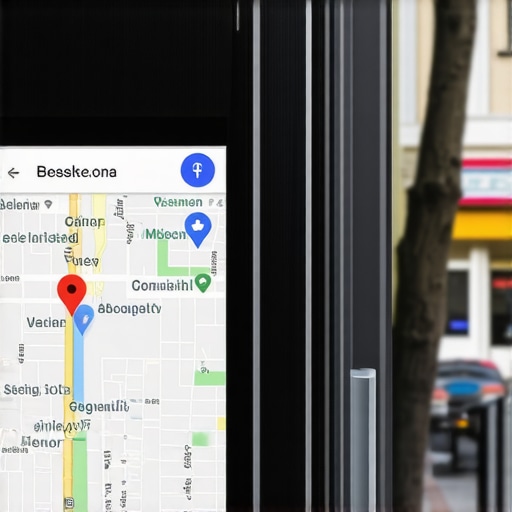 Accurate map positioning verifies your listing’s legitimacy and enhances local search prominence. Remember, Google is wary of mismatched addresses and may suppress your map pin if it suspects inaccuracies. I personally experienced this when my client’s pin kept drifting; re-centering their location fixed the issue, and their visibility skyrocketed in Seattle’s local 3-pack.
Address Potential Map Ghosting Issues
If your pin is not visible or keeps vanishing, consider checking for map layer issues or restrictions like ‘service-area’ settings that might keep your pin hidden. Also, ensure your business isn’t listed with a PO Box or virtual address unless you have a physical shop; Google disfavors these for local listings. To tackle ghosting, I adjusted the service area and added photos of the actual storefront, which provided confirmation to Google and restored accurate pin placement. For stubborn issues, consult detailed fixes in guides like this.
Leverage Neighborhood and Micro-Location Signals
Google prioritizes hyper-local signals like neighborhood names, landmarks, and proximity over broad zip codes. Incorporate neighborhood keywords naturally in your GMB description, FAQs, and website content. For example, instead of listing just “Seattle,” specify “Ballard” or “Fremont” to help Google associate your pin with precise local contexts. I helped a Fremont bookstore target micro-locations, which tripled their queries from nearby neighborhoods and cemented their map pin position. To dominate in Seattle’s competitive landscape, focus on these micro signals, detailed comprehensively at this resource.
Many local SEO practitioners and business owners in Seattle are quick to believe that simple citation consistency and keyword stuffing will guarantee map pack success. However, these surface-level tactics often lead to disappointment because they overlook crucial nuances. In my experience, the biggest mistake is assuming that traditional SEO principles directly apply—when in fact, Washington’s local landscape demands a more sophisticated approach. For instance, many think that proximity alone determines rankings, but recent studies reveal that hyper-local signals and micro-moments significantly outweigh distance, especially in competitive markets like Seattle. This misconception can trap businesses into focusing solely on zip codes or broad area targeting, which Dilutes their potential for local dominance. Don’t fall for the myth that backlinks or reviews alone secure high ranks; because, in Seattle, Google increasingly prioritizes real-time interactions and neighborhood signals.
How can advanced local signals override standard proximity tactics in the Seattle 3-pack?
Google’s algorithms are evolving, favoring nuanced cues such as neighborhood check-ins, service area modifications, and local inventory data—elements that traditional SEO often neglect. Experts like Neil Patel emphasize that embracing these hyper-local factors can outperform generic optimization strategies, particularly in the PNW region where community proximity and local engagement deeply influence search visibility. A common ‘Oops’ to avoid is over-relying on citations and reviews without optimizing your Google My Business attributes for neighborhood specificity or using schema markups that highlight micro-areas. For example, emphasizing specific Seattle neighborhoods like Fremont or Ballard in your GMB description and website content can substantially improve your local ranking. To deepen your understanding, explore how micro-location signals flip the script in Washington’s competitive SEO scene by visiting this comprehensive guide. Remember, mastering these subtle signals requires an analytical mindset and consistent fine-tuning. Have you ever fallen into this trap? Let me know in the comments.Maintaining your Seattle local SEO and map rankings requires the right tools and consistent upkeep. I rely heavily on BrightLocal for monitoring citation consistency and review signals because it provides real-time updates and detailed insights I trust personally to ensure my clients’ listings stay accurate and competitive. Additionally, Google Search Console remains invaluable for tracking website health, indexing issues, and understanding how your site performs in local searches, especially as Google’s algorithms evolve toward more hyper-local signals. To streamline local rank tracking specifically for the Seattle market, I favor GeoRanker, which offers precise ranking data segmented by neighborhood, helping me identify shifts in micro-location signals before they impact overall visibility.
For on-the-ground accuracy, I swear by using advanced GPS devices like the Garmin GPSMAP series. They help verify physical business locations and survey surrounding areas, ensuring your geo-coordinates are spot-on, which is crucial when updating your GMB info. Pairing this with tools like Schema App allows me to implement detailed structured data directly schema markup, signaling exact business info to Google—this is a strategic move many overlook but can give you an edge in hyper-competitive markets like Seattle.
Future trends point toward automation and AI-driven local SEO audits. Platforms such as SEMrush have begun integrating AI modules that analyze local signals and suggest actionable improvements, keeping your strategy proactive rather than reactive. As Google continues to refine its local algorithms, your maintenance becomes more about leveraging real-time data and less about manual updates alone. To stay ahead, adopt these tools and schedule regular reviews—monthly check-ins with your citation profiles and weekly review of your Google My Business insights can prevent small issues from snowballing.
How do I maintain mapping accuracy and local rankings over time?
Start by setting up automated alerts through BrightLocal and GeoRanker to monitor location and ranking shifts. Schedule quarterly audits using Schema App to update your structured data, especially if your business undergoes any physical or service-area changes. Incorporate regular on-site checks with GPS tools to verify geo-coordinates, and keep your NAP consistent across all platforms. Don’t forget to review customer reviews and respond promptly—they’re vital for local ranking signals. Integrate these practices into your routine, and you’ll build a resilient, scalable foundation for long-term SEO success in Seattle’s competitive market. Should you want a step-by-step guide, I recommend exploring our cornerstone content on mastering Seattle SEO, which offers tailored strategies to keep your map presence thriving—check it out at this resource.
The Untold Lessons That Changed My Map Optimization Game
One of the biggest lightbulb moments was realizing how micro-location signals could outperform traditional proximity tactics in Seattle’s competitive landscape. I learned that obsessing over micro-neighborhoods like Fremont or Ballard can instantly boost your map rankings, often more than broad zip code targeting. Another insight was how structured data schema markup, specifically geo-coordinates, acts as a GPS for Google, helping it pinpoint your exact location in the dense Seattle market. Lastly, focusing on hyper-local engagement through neighborhood check-ins and local inventory signals helped me surpass competitors who relied solely on reviews and citations, which alone aren’t enough anymore.
My Toolkit for Sustained Map Success
For anyone serious about long-term results, I swear by BrightLocal for citation consistency checks—they keep my local listings aligned. GeoRanker provides granular rank tracking by neighborhood—crucial when working in a city as segmented as Seattle. Schema App’s structured data tools make embedding geo-coordinates straightforward, ensuring Google recognizes precise locations. And for on-the-ground geo-verification, I use Garmin GPS devices—they deliver pinpoint accuracy that digital tools can’t match. Combining these resources creates a resilient foundation for dominating the Seattle local SEO scene, especially as Google’s algorithms become more focused on hyper-local signals.
Keep the Fire Burning in Your Seattle SEO Journey
Mastering map optimization is more than just a checklist—it’s an ongoing commitment to understanding your neighborhood’s unique signals and adapting your strategy accordingly. With the right tools and a curious mindset, you can turn your business into a local powerhouse. Remember, every tweak and update counts in this dynamic landscape, so stay proactive and connected with your community. Dive deeper into these strategies with our comprehensive guide, and take the next step toward map pack dominance in Seattle.
Comments are closed.