Why Embedding Google Business Profiles Won’t Fix a Weak Map Rank
I see it every single day: a small business owner or a frustrated marketing manager calls me because their business is stuck on page four of the local search results. They tell me, “Shahid, I don’t understand. I followed all the ‘hacks.’ I even embedded the map on my contact page, my footer, and my ‘About Us’ section. Why am I not ranking?” The hard truth is that google business profile seo is not a game of simple widgets or “secret” iframe codes. If you think an embed is going to catapult you into the Google 3-Pack, you’ve been sold a relic of 2012 SEO. As we move deeper into 2026, the algorithm has evolved far beyond these superficial signals. I’m Shahid Anwar, and today we are going to dismantle the “map embed” myth and look at what actually moves the needle for your local visibility.
The “Map Embed” Myth: Where Did It Come From?
The SEO industry is notorious for holding onto “zombie tactics” – strategies that died years ago but refuse to stay buried. The idea that embedding a Google Map on your website helps you rank google business profile listings stems from the concept of NAP (Name, Address, Phone number) consistency. Early on, SEOs believed that by placing an iframe of the map on a high-authority website, you were “confirming” your location to Google’s crawlers, essentially creating a high-powered citation.
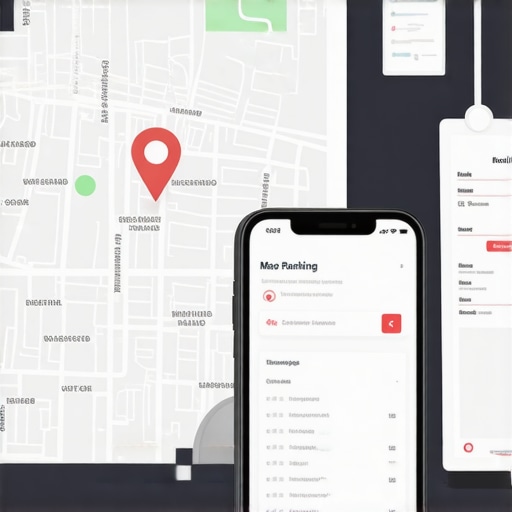
While having your map on your site is great for helping a customer find your front door, it is not a ranking signal. This isn’t just my opinion; it is backed by industry-wide data. If we look at Whitespark’s “10 Common Local SEO Myths Debunked” (specifically Myth #9), Darren Shaw and his team of researchers have explicitly stated that map embedding has zero direct impact on your position in the local pack. Google doesn’t reward you with a higher rank just because you used their iframe. If they did, every business on the planet would have a #1 ranking simply by copy-pasting a snippet of code. To truly improve google maps ranking, you must look at the structural integrity of your profile, not just your website’s footer.
The Three Pillars of Local Ranking (The Real Factors)
If map embeds aren’t the answer, what is? Google’s local algorithm is built on three primary pillars: Proximity, Relevance, and Prominence. These are the engines that drive your local map pack seo success. If you are ignoring these to focus on “hacks,” you are building your house on sand.
1. Proximity: The Geography You Can’t Ignore
Proximity is the most powerful – and often most frustrating – ranking factor. It refers to how close the searcher is to your physical business location. If a plumber is standing in the Ballard neighborhood of Seattle and searches for “water heater repair,” Google is going to prioritize businesses physically located in Ballard. You can embed a map a thousand times, but if your shop is in Renton, you are fighting an uphill battle. Understanding Why Proximity is Quietly Sabotaging Your Washington Local SEO Results is the first step in creating a realistic geographic strategy.
2. Relevance: Do You Solve the Problem?
Relevance determines how well your google business profile optimization matches the intent of the searcher. This is where your primary and secondary categories come into play. If your profile says “Lawyer” but the user is looking for a “Divorce Attorney,” you may lose out to a competitor who has specified their niche. Google scans your profile, your website, and your reviews to see if you are the best answer for that specific query. This is why having a comprehensive Unlock the Google 3 Pack for Seattle: Proven Optimization Tips plan is vital; you need to prove your relevance through every field in your GBP dashboard.
3. Prominence: The “Authority” of the Local World
Prominence is how well-known your business is. Google determines this by looking at your review count, your average rating, your local backlinks, and your general “buzz” across the web. This is the one factor you have the most control over. A business with 500 genuine, keyword-rich reviews and mentions in local Seattle news outlets will almost always outrank a business with 10 reviews, even if the latter is closer to the searcher. There are 5 Seattle SEO Factors That Outrank Proximity in 2026, and almost all of them fall under the umbrella of Prominence.
Why You Should Still Embed a Map (UX vs. SEO)
Now, don’t get me wrong – I am not telling you to go delete your map embeds. I am telling you to change your perspective on why they exist. You shouldn’t embed a map for the Google bot; you should embed it for the human being who just landed on your site. Using local seo tools can help you track how users interact with your site, and maps play a huge role in the conversion funnel.
Embedding a map provides several User Experience (UX) benefits that can indirectly “increase google business profile visibility” through better engagement:
- Trust and Transparency: Seeing a physical pin on a map validates that you are a real, local business and not a lead-gen “ghost” company.
- Reduced Friction: When a customer can click your map embed to get instant GPS directions on their phone, you’ve made it easier for them to spend money with you.
- NAP Confirmation: While the embed isn’t a ranking signal, the text surrounding the map (your address and phone number) helps maintain consistency across the web.
In short, the map is for the user. If your map pin isn’t even showing up correctly on your site, you might be facing deeper technical issues. I’ve written extensively on Why Your Seattle Map Pin Isn’t Showing Up in Early 2026 for those struggling with technical glitches.
Interaction Signals: The 2026 Ranking Powerhouse
As we look toward the future of google business profile seo, Google is placing an immense amount of weight on “Interaction Signals.” They are looking at how people engage with your listing in the wild. Does the user click “Call”? Do they scroll through your photos? Do they ask a question in the Q&A section?
These behavioral signals tell Google that your business is active and helpful. If you have a map embedded on your site, but your actual Google listing is a desert with no new photos and no responses to reviews, your rank will tank. You need to focus on 3 Interaction Moves That Finally Force a Seattle 3-Pack Win. These moves involve driving real human traffic to your profile and encouraging actions that Google can measure. To track these metrics effectively, I recommend using professional GBP ranking tools that provide deeper insights than the standard Google Insights dashboard.
What Actually Moves the Needle (Actionable Checklist)
If you want to rank higher on google maps, you need a strategy that focuses on the core algorithm. Here is the “Shahid Anwar Approved” checklist for real local growth:
1. Primary Category Accuracy
Your primary category is the single most important piece of data on your profile. If you are a “Personal Injury Attorney,” don’t just set your category to “Lawyer.” Be specific. Then, utilize secondary categories to capture related searches like “Trial Attorney” or “Legal Services.”
2. Review Velocity & Sentiment
It’s not just about getting to 100 reviews and stopping. Google looks at “velocity” – how frequently you are getting new reviews. A steady stream of two reviews per week is much better than getting 50 in one day and then going silent for six months. Furthermore, the sentiment and keywords within those reviews matter. When a customer mentions your specific service and city (e.g., “Best roofing in Seattle”), it significantly boosts your relevance.
3. Local Backlinks
A link from a local Seattle neighborhood blog, a local chamber of commerce, or a Washington-based industry association is worth ten links from generic “guest post” sites. These local links anchor your business to a specific geographic area in the eyes of the algorithm. I’ve detailed this process in my guide on The Local Link Strategy That Actually Puts Small Seattle Shops on the Map.
4. Local Inventory & Services
Fill out your “Services” and “Products” sections with meticulous detail. Don’t just list the name; write a description that includes the problems you solve. This content is indexed and helps Google match your profile to long-tail search queries.
Common Mistakes That Kill Your Map Rank
While you are working on your google maps ranking service strategy, make sure you aren’t committing these common “crimes” that lead to suspensions or ranking drops:
- Keyword Stuffing the Business Name: Adding “Seattle Best Plumber” to your business name when it’s just “Joe’s Plumbing” is a one-way ticket to a suspension.
- Using a Virtual Office: Google is cracking down hard on P.O. Boxes and virtual offices. If you don’t have a physical presence where customers can go, you are at risk.
- Messy Citations: If your address is “123 Main St” on Yelp and “123 Main Street, Suite A” on your website, you are creating confusion for the algorithm.
Conclusion: It’s Time to Stop Playing with Widgets
In conclusion, embedding a map is a “nice-to-have” for your website visitors, but it is not a strategy to rank google business profile listings. To dominate the local pack, you must focus on proximity, relevance, and prominence. You must drive real interaction signals and build a brand that Google recognizes as an authority in your local market.
Stop wasting time on “hacks” and start focusing on the factors that actually drive revenue. If you’re ready to dominate the PNW market and want to see how the pros do it, check out our google maps optimization tools or contact Shahid Anwar for a custom local SEO strategy that puts you exactly where your customers are looking: the 3-Pack.